Business Model and Sustainable Development Goals for an Innovative Agricultural Waste Management: Distributed Biogas Production
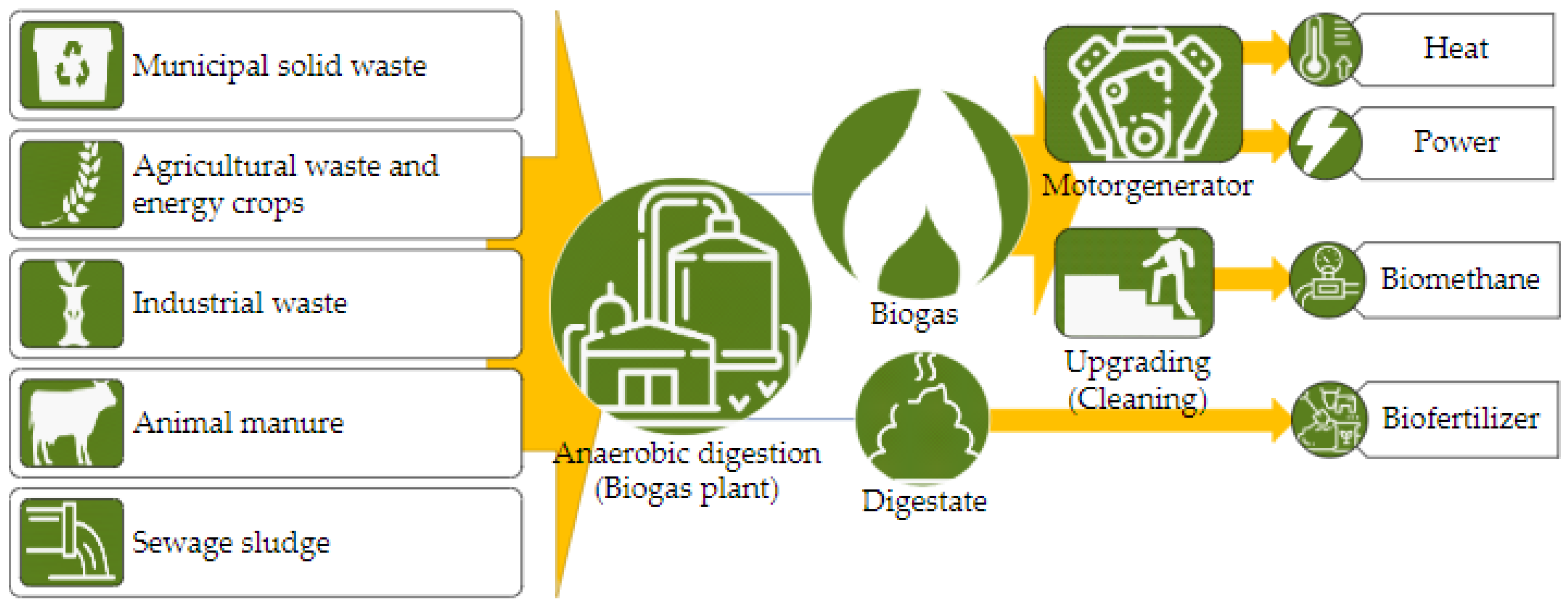
"Technological progress and population growth have increased global pork demand; leading to a rise of methane emission from pig farming, a key contributor to climate change. Anaerobic digestion offers a sustainable solution by converting manure into biogas. Small-scale systems are cost-effective and energy-efficient but upgrading biogas to biomethane is a challenge. Distributed biogas production is a system that involves biogas production at multiple small-scale farms, transportation to a common upgrading facility, and conversion to biomethane for use as vehicle fuel or injection into gas grids. This study develops a comprehensive business model for distributed biogas production, including a model business canvas and impact on sustainable development goals (SDGs), with high positive impact in SDGs 7 and 12. In a hypothetical zone with 48 farms and centralised membrane-based upgrading, total biomethane production is 11,780 MWh/year, with a CAPEX of EUR 7,650,000 and OPEX of EUR 1,025,000/year. The break-even biomethane price is EUR 112.17/MWh for a 20 year horizon, competitive with diesel but not with natural gas unless EU ETS or origin guarantee prices increase. The BMC shows that distributed biogas production creates value through waste recovery, the generation of renewable gas and fertilisers, detailing the main costumers and key elements of the business model, demonstrating distributed biogas production could play a vital role in the energy transition and sustainable rural development."
Sobre o artigo
The study evaluates a distributed biogas production system for pig farming waste, where manure from multiple small farms is converted into biogas and upgraded centrally into biomethane.
María-Pilar, et. al.
Autor do artigo